Petsafe Automatic Feeder User Manual: A Comprehensive Guide
Welcome! This comprehensive manual unlocks the full potential of your Petsafe Automatic Feeder, offering a streamlined approach to pet feeding and enhanced convenience.
Congratulations on selecting a Petsafe Automatic Feeder! This innovative device is designed to simplify pet feeding, ensuring your furry friend receives consistent, measured portions even when you’re away. This feeder promotes healthy eating habits and offers peace of mind, knowing your pet is well-cared for.
This user manual serves as your complete guide, walking you through every step – from initial setup and programming to maintenance and troubleshooting. We’ll cover everything you need to know to maximize the benefits of your new feeder. Prepare to experience a new level of convenience and control over your pet’s meal times. Let’s begin your journey towards effortless pet feeding!
Unboxing and Component Identification
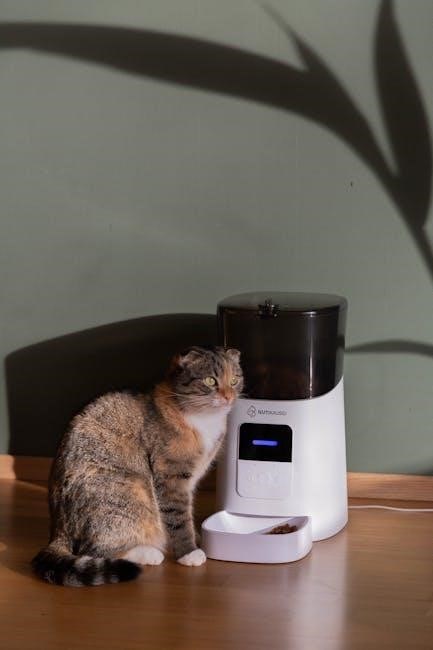
Carefully unpack your Petsafe Automatic Feeder and verify all components are present. You should find the feeder base, food hopper (removable), food bowl (typically stainless steel or plastic), power adapter, and this user manual. Some models may include a battery compartment cover or additional accessories.
Inspect each part for any shipping damage. The food hopper is designed to hold a substantial amount of dry food, while the bowl provides a designated eating area for your pet. Familiarize yourself with the control panel, noting the LCD screen and programming buttons. Proper identification of these components will be crucial during setup and future maintenance. Retain the packaging for potential returns or warranty claims.
Setting Up Your Feeder: Initial Configuration
Begin by selecting a suitable location for your Petsafe feeder – a stable, level surface near a power outlet is ideal. Ensure it’s accessible for refilling and cleaning. Insert the food hopper securely onto the base, and attach the food bowl. Before programming, it’s recommended to manually dispense some food to prime the mechanism and ensure smooth operation.
Check the time display and adjust it if necessary, as accurate timing is vital for scheduled feedings. Most models require you to set the current hour and minute. Avoid placing the feeder in direct sunlight or near water sources. A brief test run with a small portion of food will confirm everything is functioning correctly before relying on automated feedings.
Powering the Feeder: Battery & Adapter Options
Your Petsafe feeder offers flexible power solutions for uninterrupted operation. It can be powered by an AC adapter, typically included, plugged into a standard outlet. Alternatively, most models accept D-cell batteries as a backup or primary power source – check your model’s specifications for the required quantity.
Using both adapter and batteries simultaneously provides redundancy; if the power goes out, the feeder seamlessly switches to battery power. Regularly check battery levels, especially if relying solely on batteries, to avoid missed feedings. A low battery indicator will alert you when replacement is needed. Always use high-quality batteries for optimal performance and longevity.

Programming the Feeding Schedule
Customize meal times effortlessly! This section details how to set precise feeding schedules tailored to your pet’s needs, ensuring consistent and reliable nourishment.
Accessing the Programming Mode
Initiating the programming sequence on your Petsafe Automatic Feeder is a straightforward process. Begin by ensuring the feeder is powered on and displaying the current time. Locate the ‘Program’ or ‘Set’ button – its exact labeling may vary slightly depending on your model. Press and hold this button for approximately three to five seconds.
The display will likely flash, indicating you’ve entered programming mode. You may see icons representing hours, minutes, and meal slots begin to blink. Refer to your specific model’s diagram within this manual to confirm icon meanings. Some models might require a double-press or a combination of buttons to access this mode. If you encounter difficulty, consult the troubleshooting section or the Petsafe support website for detailed instructions tailored to your feeder.
Setting Meal Times: Hour and Minute Configuration
Once in programming mode, configuring meal times involves adjusting the hour and minute settings. Typically, the hour display will blink first. Use the ‘Up’ and ‘Down’ arrow buttons (or similar controls on your model) to increment or decrement the hour until the desired time is displayed. Press the ‘Program’ or ‘Set’ button again to confirm the hour and move to the minute setting.
The minute display will now blink. Again, utilize the arrow buttons to set the correct minute. Pay close attention to the AM/PM indicator, if present, ensuring the correct time of day is selected. Confirm the minute setting by pressing ‘Program’ or ‘Set’ once more. This process establishes a single meal time; repeat for each desired feeding schedule.
Portion Control: Adjusting Food Dispense Amounts
Precise portion control is crucial for your pet’s health. Your Petsafe feeder allows you to customize the amount of food dispensed at each meal. Access the portion control settings through the programming mode, usually indicated by a ‘Portion’ or ‘Food Amount’ option. Use the arrow buttons to increase or decrease the portion size.
Portion sizes are often measured in cups or grams; consult your pet’s dietary needs and the feeder’s manual for accurate measurements. Start with smaller portions and observe your pet’s weight and appetite. Regularly adjust the portion size as needed. Remember to save your settings after each adjustment to ensure consistent feeding.
Multiple Pet Feeding: Utilizing Separate Schedules
Managing mealtimes for multiple pets can be simplified with your Petsafe feeder, depending on the model. Some advanced feeders allow you to create distinct feeding schedules for each animal. Look for features like ‘Pet Profiles’ or ‘Multiple Pet Mode’ within the programming settings. You’ll be able to assign specific meal times and portion sizes to each pet’s profile.
If your feeder doesn’t support individual profiles, consider using separate feeders for each pet. Alternatively, carefully monitor food consumption and adjust portion sizes to ensure each pet receives an adequate amount. Consistent observation is key to preventing over or underfeeding.

Understanding the Feeder’s Features
Explore key functionalities! Discover the slow feed option, dispensing mechanism details, low battery alerts, and jam detection – maximizing your feeder’s benefits.
Slow Feed Option: Preventing Rapid Eating
Addressing a common concern, the Petsafe Automatic Feeder incorporates a valuable slow feed option designed to promote healthier eating habits for your pet. Rapid eating can lead to indigestion, bloating, and even more serious health issues like gastric dilation-volvulus (GDV), particularly in larger breeds.
This feature intelligently dispenses smaller portions of food over a longer period, effectively slowing down your pet’s consumption rate. By extending meal times, you encourage mindful eating and allow for better digestion. The slow feed setting is easily adjustable, allowing you to customize the pace to suit your pet’s individual needs and dietary requirements. Consult with your veterinarian to determine the optimal slow feed setting for your furry friend, ensuring a comfortable and beneficial feeding experience.
Dispensing Mechanism: How it Works
At the heart of the Petsafe Automatic Feeder lies a precisely engineered dispensing mechanism ensuring reliable and accurate food delivery. The system utilizes a rotating auger, driven by a quiet, efficient motor, to carefully measure and dispense pre-set portions. Food is released from the hopper into the auger chamber, and as the auger rotates, it pushes the food towards the dispensing outlet and into your pet’s bowl.
This design minimizes food wastage and prevents jamming, contributing to a consistent feeding schedule. The auger’s speed and rotation duration are meticulously controlled by the feeder’s programming, guaranteeing the correct amount of food is dispensed at each scheduled mealtime. Regular cleaning, as detailed in the maintenance section, is crucial for optimal performance.

Low Battery Indicator & Alerts
Your Petsafe Automatic Feeder is equipped with a sophisticated low battery indicator system to prevent disruptions in your pet’s feeding schedule. A flashing red light on the control panel signals when the battery level is critically low, prompting immediate attention. Furthermore, many models feature audible alerts – a series of beeps – to draw your attention to the low battery status.
To ensure uninterrupted operation, promptly replace the batteries with fresh ones or connect the AC adapter. Some advanced models also send notifications via a connected mobile app, providing remote alerts about the battery level. Ignoring these warnings could lead to missed feedings, so proactive battery management is essential.
Jam Detection & Troubleshooting
The Petsafe Automatic Feeder incorporates a smart jam detection system designed to prevent motor strain and ensure consistent food dispensing. If the feeder detects an obstruction – often caused by oddly shaped kibble or excessive food clumps – it will temporarily halt operation and display an error message, typically a flashing light or a specific code on the LCD screen.
To resolve a jam, first power off the feeder. Carefully disassemble the food dispensing mechanism, following the cleaning instructions in this manual. Remove any visible obstructions. Gently test the motor’s rotation to confirm it’s no longer blocked. Reassemble the feeder and power it on. If the jam persists, consult the troubleshooting section or contact Petsafe support.

Maintenance and Cleaning
Regular cleaning is crucial for optimal performance and your pet’s health. Disassemble and wash components frequently to prevent food buildup and bacterial growth.
Disassembling the Feeder for Cleaning
Before cleaning, always disconnect the power source – remove batteries or unplug the adapter. Most Petsafe feeders feature a removable food hopper and bowl for easy access. Gently lift the hopper to detach it from the base, being careful not to spill any remaining food. The bowl typically slides or unclips from the feeder body.
Some models may have additional components like a dispensing mechanism cover. Refer to your specific model’s diagrams for precise disassembly instructions. Avoid using harsh chemicals or abrasive cleaners, as these can damage the plastic and potentially harm your pet. A mild dish soap and warm water solution are ideal. Ensure all parts are completely dry before reassembling the feeder.
Cleaning the Food Hopper and Bowl
Thorough cleaning is vital to prevent bacterial growth and maintain food freshness. Wash the food hopper and bowl with warm, soapy water after each use, or at least weekly, even if seemingly empty. Pay close attention to crevices and corners where food particles may accumulate. A soft brush can be helpful for reaching tight spots.
Rinse both components thoroughly under running water, ensuring all soap residue is removed. For stubborn food buildup, a brief soak in warm, soapy water can loosen debris. Completely dry both the hopper and bowl before reassembling. Avoid using a dishwasher unless specifically stated as safe in your model’s instructions.
Preventing Food Spoilage & Maintaining Hygiene
Maintaining optimal hygiene is crucial for your pet’s health. Store pet food in a cool, dry place within an airtight container to prevent spoilage and pest infestation. Regularly inspect the food for any signs of mold, discoloration, or unusual odors. Avoid filling the hopper with excessively large quantities of food, especially in humid environments.
Clean the feeder’s exterior with a damp cloth regularly. Consider using a food-grade silicone sealant around the dispensing mechanism to prevent food buildup and facilitate cleaning. Proper hygiene minimizes bacterial growth, ensuring your pet receives fresh, safe meals consistently.

Troubleshooting Common Issues
Facing difficulties? This section provides solutions for typical problems, like dispensing failures, programming errors, or unusual noises, ensuring seamless operation.
Feeder Not Dispensing Food
Problem: If your Petsafe feeder isn’t dispensing food, first verify the hopper isn’t empty and food isn’t clumped, blocking the mechanism. Ensure the programming schedule is correctly set with active meal times.
Check for Jams: Carefully inspect the dispensing path for obstructions. A manual reset might be needed – consult the ‘Resetting the Feeder’ section. Confirm the feeder is receiving power, either from batteries or the adapter.
Food Type: Certain kibble shapes or sizes may cause issues. Try a different food type. If the problem persists, contact Petsafe support for assistance, providing your feeder’s model number and a detailed description of the issue.
Programming Errors & Resetting the Feeder
Incorrect Settings: If the feeder isn’t operating as expected, double-check the programmed meal times and portion sizes. Errors can occur during initial setup or after power interruptions. Review each setting carefully, ensuring AM/PM is correctly designated.
Reset Procedure: To reset the feeder, locate the reset button (usually a small recessed button). Use a paperclip or similar tool to press and hold it for 5-10 seconds. This will restore the feeder to its factory default settings.
Re-Programming: After a reset, you’ll need to re-enter your desired feeding schedule and portion control settings. Refer to the ‘Programming the Feeding Schedule’ section for detailed instructions. Save your changes after each adjustment.
Motor Noise & Potential Malfunctions
Normal Operation Sounds: A slight whirring sound during food dispensing is normal. However, excessive grinding, clicking, or loud buzzing indicates a potential issue with the motor or dispensing mechanism.
Obstruction Check: If unusual noises occur, immediately check for obstructions in the food path. Foreign objects or compacted food can strain the motor. Disconnect power before inspecting.
Motor Overload: Continuous operation against resistance can cause motor overload. If the motor seems stuck, do not force it. Contact Petsafe customer support for assistance. Attempting self-repair may void the warranty.

Advanced Features & Tips
Unlock Full Potential! Explore app connectivity, remote control options, and firmware updates for a customized feeding experience and optimal performance.
Using the Mobile App (If Applicable)
Seamless Control at Your Fingertips: If your Petsafe feeder model includes smartphone app compatibility, download and install the dedicated application from your device’s app store. The app provides remote access to all feeder functions, allowing you to adjust feeding schedules, portion sizes, and monitor food levels from anywhere with an internet connection.
Personalized Pet Care: Create customized feeding profiles for each of your pets, ensuring they receive the appropriate amount of food at the right times. Receive push notifications for low food levels, dispensing confirmations, and potential error alerts. The app often features a historical feeding log, providing valuable insights into your pet’s eating habits. Explore advanced settings for tailored feeding strategies and enjoy the convenience of managing your pet’s nutrition remotely.
Remote Control Functionality (If Applicable)
Convenience Beyond the App: Certain Petsafe Automatic Feeder models offer dedicated remote control functionality, providing an alternative to smartphone app control; This handheld remote allows for immediate adjustments to feeding schedules and portion sizes without needing to access a mobile device or internet connection.
Instant Feeding Adjustments: Utilize the remote to dispense an immediate meal, perfect for unexpected situations or rewarding good behavior. Easily navigate the menu to modify existing schedules or create temporary feeding adjustments. The remote’s intuitive button layout ensures simple operation, even for users less familiar with technology. Enjoy the flexibility of controlling your pet’s feeding schedule from anywhere within the remote’s range, offering a convenient backup to app-based control.
Firmware Updates & Compatibility
Ensuring Optimal Performance: Petsafe regularly releases firmware updates for compatible automatic feeder models to enhance functionality, improve performance, and address potential bugs. These updates are typically delivered through the mobile app (if applicable) and require a stable Wi-Fi connection during the installation process.
Staying Current: Regularly check for updates within the app’s settings menu to ensure your feeder operates with the latest features and security enhancements. Compatibility extends to various smartphone operating systems (iOS and Android), but always verify the app’s minimum requirements. Maintaining updated firmware guarantees seamless integration with the Petsafe ecosystem and maximizes the lifespan of your automatic feeder, providing a reliable and efficient feeding solution for your pet.
Safety Precautions & Warranty Information
Important Safety Guidelines: Always supervise your pet during initial use to ensure proper interaction with the feeder. Do not immerse the feeder base in water; clean only with a damp cloth. Keep the power cord away from chewing pets to prevent electrical hazards. This device is intended for indoor use only.
Warranty Coverage: Your Petsafe Automatic Feeder is covered by a one-year limited warranty against manufacturing defects. This warranty does not cover damage resulting from misuse, accidental damage, or unauthorized modifications. Proof of purchase is required for all warranty claims. Visit the Petsafe website for complete warranty details and claim procedures. Register your product online to activate your warranty!
 canon powershot sx60 hs user manual
  honeywell rth7600d operating manual
  2018 hyundai elantra manual
  honda odyssey 2018 manual
  magic chef washer dryer combo manual
  gray’s manual of botany
  prayers for fasting pdf
  park city winter trail map pdf