
Delve into comprehensive guidance for your BMW 1 Series, encompassing installation of performance chips and detailed factory service manuals for models spanning 2011-2017.
Model Overview & Generations
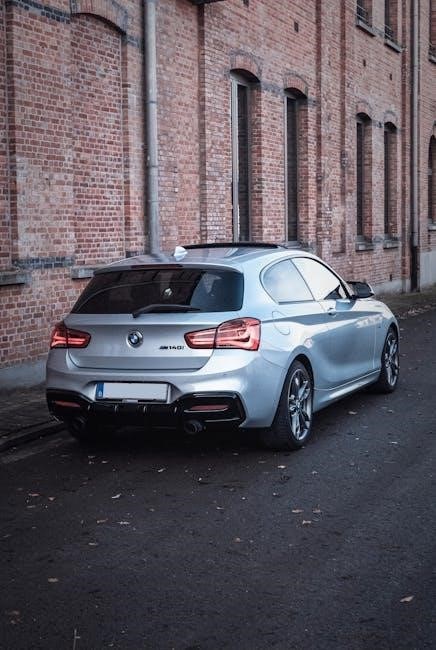
The BMW 1 Series (F20/F21) represents a significant evolution in the compact executive car segment, initially launched in 2011 and continuing through 2017. This generation marked a shift to front-wheel-drive architecture for many models, though xDrive all-wheel-drive options remained available.
The F20 chassis code designates the 5-door hatchback, while F21 represents the 3-door variant, offering distinct styling and practicality choices. Numerous engine options were offered throughout its production run, including the 116i, 118i, and more powerful variants.
Owners seeking detailed repair information can access free factory service manuals covering the 2011-2017 model years. Furthermore, specialized supplementary manuals, like those for the high-performance 1 Series M Coupe, provide focused guidance for specific models and features. Understanding these generational nuances is crucial for proper maintenance and repair.
Understanding Your Vehicle’s VIN
Your BMW 1 Series’ Vehicle Identification Number (VIN) is a unique 17-character code, crucial for identifying your specific vehicle and accessing relevant information. This code unlocks access to detailed factory service manuals, ensuring you have the correct documentation for your F20 or F21 model.
The VIN is essential when sourcing parts, scheduling maintenance, or verifying vehicle history. It confirms compatibility with repair procedures outlined in workshop manuals covering the 2011-2017 production years.
Furthermore, the VIN is vital when installing aftermarket components, such as a RaceChip performance device, guaranteeing proper fitment and functionality. Always reference your VIN when seeking support or documentation related to your BMW 1 Series.
Vehicle Features & Controls
Explore the intricacies of your BMW 1 Series, from deciphering dashboard symbols to mastering the iDrive system and optimizing climate control settings.
Dashboard Symbols & Indicators
Understanding the symbols illuminating your BMW 1 Series dashboard is crucial for safe and informed driving. A comprehensive grasp of these indicators allows for prompt identification of potential issues, preventing minor concerns from escalating into significant problems.
The instrument cluster displays a variety of warning lights, information symbols, and status indicators. Red symbols generally signify critical issues demanding immediate attention, such as low oil pressure or brake system malfunctions. Yellow or amber indicators often signal potential problems requiring investigation, like a malfunctioning sensor or approaching maintenance interval.
Green or blue symbols typically provide information about activated systems or normal operating conditions. Familiarize yourself with the meaning of each symbol in your owner’s manual to ensure you can react appropriately to any warning or notification. Ignoring a warning light could lead to vehicle damage or compromise your safety. Regularly check for illuminated symbols during and after each drive.
Steering Wheel Controls & Functions
The multi-function steering wheel in your BMW 1 Series consolidates numerous vehicle controls for convenient operation while keeping your focus on the road. These controls allow adjustment of audio settings, activation of cruise control, and management of phone calls and iDrive functions without removing your hands from the wheel.
Typically, buttons on the left side manage audio volume, track selection, and radio station presets. The right side often controls iDrive functions, including menu navigation and selection. A central controller allows for scrolling through options.
Voice control activation is usually accessible via a dedicated button, enabling hands-free operation of various vehicle features. Cruise control functions, such as setting speed and resuming, are also integrated into the steering wheel. Familiarize yourself with the layout and functionality of these controls to maximize convenience and safety during your driving experience.
Infotainment System – BMW iDrive
BMW’s iDrive system serves as the central hub for controlling various vehicle functions, including navigation, entertainment, and communication. Accessed through a central controller and a high-resolution display screen, iDrive offers an intuitive interface for managing your driving experience.
The system allows you to navigate through menus using the controller, select options, and customize settings to your preferences. iDrive integrates seamlessly with your smartphone, enabling Bluetooth connectivity for hands-free calling and audio streaming.

You can also access online services, such as real-time traffic information and internet radio. The system supports voice control, allowing you to operate functions without taking your hands off the wheel. Explore the various features and customization options within iDrive to personalize your in-car experience and stay connected on the go.
Climate Control Operation
The BMW 1 Series features a sophisticated climate control system designed to maintain optimal comfort within the cabin. Manual or automatic climate control options are available, depending on the vehicle’s trim level. Automatic systems allow you to set a desired temperature, and the system will automatically adjust fan speed and air distribution to maintain it.
Controls for temperature, fan speed, and air distribution are conveniently located on the center console. You can select between various modes, such as defrost, floor, and panel, to direct airflow where it’s needed most. Recirculation mode helps to filter outside air, improving air quality and reducing odors.
Understanding these controls allows you to personalize your driving environment and ensure a comfortable journey, regardless of external weather conditions. Proper use of the climate control system also contributes to visibility by quickly clearing fogged windows.

Driving & Safety
Master essential driving procedures, including engine operation, driving mode selection, and braking system understanding, alongside crucial driver assistance system functionalities.
Starting & Stopping the Engine
Starting your BMW 1 Series is a straightforward process. Ensure the vehicle is in Park (P) or Neutral (N), depress the brake pedal firmly, and then press the Start/Stop button. The engine will ignite, and the instrument cluster will illuminate. For vehicles equipped with Comfort Access, the engine can be started without the key present, simply by pressing the button while braking.
To stop the engine, depress the brake pedal and press the Start/Stop button again. The engine will shut down, and the vehicle will enter standby mode. Always ensure the vehicle is completely stopped before switching off the engine. Avoid prolonged idling, as it can negatively impact fuel efficiency and potentially lead to engine wear. Remember to engage the parking brake before exiting the vehicle for added safety.
In emergency situations, a quick press of the Start/Stop button while the engine is running will initiate an immediate shutdown. However, this should only be used when absolutely necessary.
Understanding Driving Modes (ECO PRO, Comfort, Sport)
Your BMW 1 Series offers selectable driving modes to tailor the vehicle’s performance to your preferences and driving conditions. ECO PRO mode prioritizes fuel efficiency by moderating throttle response, optimizing gear shifts, and reducing energy consumption of auxiliary systems. This mode is ideal for city driving and long journeys where maximizing mileage is key.
Comfort mode provides a balanced driving experience, offering a blend of performance and efficiency. Throttle response is more immediate than in ECO PRO, and the suspension is tuned for a comfortable ride. Sport mode unlocks the vehicle’s full potential, sharpening throttle response, stiffening the suspension, and providing more aggressive gear shifts. This mode is best suited for spirited driving on winding roads.
Driving mode selection is typically accessed via a dedicated button near the gear selector, allowing you to seamlessly switch between modes on the fly.
Braking System & ABS
Your BMW 1 Series is equipped with a high-performance braking system featuring Anti-lock Braking System (ABS) technology. ABS prevents wheel lock-up during hard braking, allowing you to maintain steering control and reduce stopping distances, particularly on slippery surfaces. A pulsating sensation in the brake pedal during ABS activation is normal and indicates the system is functioning correctly.
The braking system also incorporates features like Brake Assist, which detects emergency braking situations and automatically applies maximum braking force. Regular inspection of brake pads, rotors, and brake fluid levels is crucial for optimal performance and safety. Always use BMW-approved brake fluid to ensure compatibility and prevent damage to the system.
Familiarize yourself with the feel of the brakes and practice emergency braking in a safe environment to understand how the ABS system operates.
Driver Assistance Systems (Parking Sensors, Lane Departure Warning)
Your BMW 1 Series may include advanced driver assistance systems designed to enhance safety and convenience. Parking sensors, front and rear, utilize ultrasonic technology to detect obstacles during maneuvering. Audible warnings increase in frequency as you approach an object, providing guidance for safe parking. Lane Departure Warning alerts you if the vehicle unintentionally drifts out of its lane.
The system uses a camera to monitor lane markings and provides a visual and/or audible warning. It’s crucial to remember these systems are aids, not replacements for attentive driving. Always maintain awareness of your surroundings and exercise caution. Settings for these systems can be adjusted through the iDrive infotainment system.
Refer to the iDrive manual for detailed instructions on customization and operation of these features.

Maintenance & Care
Ensure optimal performance and longevity by adhering to scheduled maintenance, checking fluid levels, monitoring tire pressure, and promptly replacing worn windshield wipers.
Scheduled Maintenance Intervals
Maintaining your BMW 1 Series (F20/F21) requires adherence to a structured maintenance schedule to ensure optimal performance and reliability. Regular servicing, as outlined in your vehicle’s service booklet or through a BMW dealership, is crucial. These intervals aren’t simply about mileage; time also plays a significant role, especially for components susceptible to degradation regardless of usage.
Minor services typically occur annually or every 10,000 miles (whichever comes first), encompassing oil and filter changes, fluid level checks, and a comprehensive vehicle inspection. Major services, generally scheduled every two years or 20,000 miles, include more extensive checks and replacements, such as spark plugs, air filters, and brake fluid.

Additional components, like the coolant and transmission fluid, have specific replacement intervals detailed in the service manual. Ignoring these schedules can lead to premature wear, reduced efficiency, and potentially costly repairs. Utilizing a BMW-approved service center guarantees genuine parts and qualified technicians, preserving your vehicle’s warranty and value.
Checking Fluid Levels (Oil, Coolant, Brake Fluid)
Regularly inspecting your BMW 1 Series’ fluid levels is a simple yet vital maintenance task. Begin with the engine oil – park on level ground, wait for the engine to cool, and use the dipstick to verify the level is between the minimum and maximum marks. Next, check the coolant level in the expansion tank; it should be between the ‘Min’ and ‘Max’ indicators when the engine is cold.
Brake fluid is equally important. Locate the reservoir (usually near the master cylinder) and ensure the level is within the designated range. Never allow it to fall below the minimum line. Low brake fluid can indicate a leak in the system.
Power steering fluid (if applicable) and windshield washer fluid should also be checked periodically. Always use the correct fluid type specified in your owner’s manual. Addressing low fluid levels promptly prevents potential damage and ensures safe operation.
Tire Pressure Monitoring System (TPMS)
Your BMW 1 Series is equipped with a Tire Pressure Monitoring System (TPMS) designed to enhance safety and fuel efficiency. This system continuously monitors the air pressure in each tire, alerting you if pressure drops significantly. A warning light on the dashboard illuminates when a tire is underinflated.
It’s crucial to check tire pressures manually with a reliable gauge, even with TPMS active, as the system doesn’t replace regular maintenance. Refer to the sticker on the driver’s side doorjamb for the recommended tire pressures for your vehicle.
After inflating tires, the TPMS may require a reset. Consult your owner’s manual for specific reset procedures. Ignoring low tire pressure can lead to uneven wear, reduced handling, and increased risk of a blowout. Maintaining correct pressure optimizes performance and extends tire life.
Replacing Windshield Wipers
Maintaining clear visibility is paramount for safe driving, and functional windshield wipers are essential. Replacing them on your BMW 1 Series is a straightforward process. First, lift the wiper arm away from the windshield. Locate the release tab on the wiper blade – it varies by blade type, but is usually a button or clip.
Press or slide the release tab to disengage the old blade. Gently slide the new wiper blade onto the wiper arm until it clicks securely into place. Lower the wiper arm back onto the windshield, ensuring it’s properly seated.
Repeat the process for the other wiper blade. Regularly inspect your wiper blades for wear and tear, replacing them every six to twelve months, or sooner if streaking or chattering occurs. Proper wiper function ensures optimal visibility during inclement weather.

Technical Specifications
Explore detailed engine specs for models like the 116i and 118i, alongside recommended fuel, oil types, and compatible wheel and tire dimensions.
Engine Specifications (116i, 118i, etc.)
The BMW 1 Series (F20/F21) offered a range of efficient and dynamic engines. The 116i typically features a 1.6-liter turbocharged four-cylinder engine, producing around 136 horsepower and 220 Nm of torque, enabling a 0-60 mph time of approximately 8.5 seconds. Moving up to the 118i, you’ll find a more potent version of the same engine, delivering roughly 170 horsepower and 240 Nm of torque, reducing the acceleration time to around 7.4 seconds.
Higher-performance variants, such as the 120i, boast a 1.6-liter engine with approximately 192 horsepower and 280 Nm of torque. Diesel options, like the 116d and 118d, utilize 1.5 and 2.0-liter turbocharged engines respectively, prioritizing fuel efficiency alongside respectable power outputs. These engines deliver excellent torque for everyday driving and long journeys. Precise specifications can vary slightly depending on the production year and specific market.
Fuel & Oil Recommendations
Maintaining optimal engine performance in your BMW 1 Series (F20/F21) requires using the correct fuel and oil. BMW generally recommends using premium unleaded gasoline with a minimum octane rating of 95 RON (Research Octane Number) for petrol engines, ensuring efficient combustion and preventing engine knocking. For diesel engines, standard diesel fuel complying with EN 590 standards is suitable.
Regarding engine oil, BMW specifies the use of BMW Longlife-04 or Longlife-12 FE oils, adhering to the viscosity grade recommended in your vehicle’s owner’s manual – typically 5W-30 or 0W-30. These oils are formulated to provide superior protection against wear, corrosion, and deposit formation, extending engine life. Always check your vehicle’s handbook for the precise oil specification and capacity, as variations exist based on engine type and model year.
Wheel & Tire Sizes
Selecting the correct wheel and tire sizes is crucial for your BMW 1 Series (F20/F21), impacting handling, safety, and fuel efficiency. Standard wheel sizes vary depending on the model and trim level, commonly ranging from 16 to 18 inches in diameter. Corresponding tire sizes are typically 195/55 R16, 205/50 R17, or 225/40 R18, though specific recommendations are detailed in your vehicle’s owner’s manual.
When replacing tires, ensure they match the original specifications regarding load index and speed rating. Using incorrect sizes can affect speedometer accuracy and compromise vehicle stability. Always prioritize tires approved by BMW for optimal performance and safety. Consider winter tires during colder months for enhanced grip and control in adverse conditions, selecting sizes appropriate for dedicated winter wheels.

Troubleshooting & Common Issues
Address typical concerns like battery failures, jump-starting procedures, and deciphering warning lights – essential for maintaining your BMW 1 Series’ optimal functionality.
Battery Replacement & Jump Starting

Replacing the battery in your BMW 1 Series (F20/F21) requires careful attention to detail to avoid damaging the vehicle’s electrical system. Always disconnect the negative terminal first, followed by the positive, before removing the old battery. When installing the new battery, connect the positive terminal first, then the negative.
Jump-starting a BMW 1 Series also demands a specific procedure. Ensure both vehicles are switched off before connecting the jump leads. Connect the red lead to the positive terminal of the discharged battery and the other end to the positive terminal of the working battery. Then, connect the black lead to the negative terminal of the working battery and the other end to a grounded metal part of the engine block of the discharged vehicle – never directly to the negative terminal of the discharged battery. Start the working vehicle, let it run for a few minutes, and then attempt to start the BMW 1 Series.
Consult your BMW 1 Series workshop manual for detailed diagrams and specific instructions related to your model year.
Warning Light Meanings & Actions
Understanding the warning lights on your BMW 1 Series (F20/F21) dashboard is crucial for maintaining vehicle health and safety. A lit check engine light indicates a potential engine issue requiring diagnosis – reduced engine performance may occur. The battery warning light signals a charging system problem; investigate immediately to prevent stalling.
Brake warning lights can signify low brake fluid or a parking brake engagement. An ABS warning light indicates a fault within the anti-lock braking system, potentially affecting braking performance. Ignoring warning lights can lead to more significant and costly repairs.
Refer to your BMW 1 Series owner’s manual for a comprehensive list of all warning lights and recommended actions. If a warning light remains illuminated after addressing the obvious cause, seek professional assistance from a qualified BMW technician for a thorough inspection and diagnosis.
Fuse Box Locations & Diagram
Locating the fuse boxes in your BMW 1 Series (F20/F21) is essential for addressing electrical issues. Typically, there are two fuse box locations: one within the glove compartment and another in the engine compartment. The glove compartment fuse box handles interior components like lights, radio, and climate control.
The engine compartment fuse box protects critical systems such as the engine control unit, fuel pump, and headlights. A detailed fuse diagram, often found inside the fuse box covers or within the owner’s manual, illustrates each fuse’s function and amperage rating.
Always disconnect the negative battery terminal before replacing a fuse to prevent short circuits. Use the correct amperage fuse replacement; using a higher amperage fuse can cause severe damage. Refer to your BMW 1 Series repair manual for specific fuse box layouts and diagrams.

Additional Information
Explore supplementary resources, including RaceChip installation guides and the specialized owner’s manual for the high-performance BMW 1 Series M Coupe model.
RaceChip Installation Guide (Overview)
The RaceChip installation process for your BMW 1 Series is meticulously detailed within the provided documentation. This guide outlines everything included within the RaceChip package, ensuring a smooth and successful installation experience. It begins with a comprehensive overview of the RaceChip device itself, explaining its functionality and benefits for enhancing your vehicle’s performance.
The instructions clearly illustrate the necessary steps, focusing on locating the correct electrical connectors within your BMW 1 Series (F20/F21). Precise diagrams and explanations are provided to facilitate accurate connection of the RaceChip module. It’s crucial to follow these instructions carefully to avoid any potential issues or damage to your vehicle’s electrical system. The guide emphasizes safety precautions throughout the installation process, recommending disconnecting the battery before commencing work. Post-installation, the manual details how to verify correct operation and optimize the RaceChip settings for your specific driving style and preferences.
BMW 1 Series M Coupe – Supplementary Manual
This supplementary owner’s manual is specifically tailored for the high-performance BMW 1 Series M Coupe, providing additional information beyond the standard owner’s handbook. Available as a downloadable PDF, it delves into details unique to this iconic model, offering a deeper understanding of its specialized components and features.
The manual covers critical aspects such as headlamp operation, brake system specifics, and other nuances that differentiate the M Coupe from other 1 Series variants. It serves as a valuable resource for owners seeking to maximize their driving experience and maintain their vehicle to the highest standards. This document is accessible online in PDF or text format, offering convenient access to essential information. It’s a crucial companion for enthusiasts wanting a comprehensive understanding of their M Coupe’s capabilities and maintenance requirements, ensuring optimal performance and longevity.
 bible quiz questions and answers pdf
  macbeth key quotes gcse pdf
  status 7 day digital timer switch instructions
  macbeth key quotes gcse pdf
  racesafe body protector size guide
  bosch washing machine user manual pdf
  bmw 1 series user manual
  craftsman garage door remote instructions
  julian date calendar 2023 pdf
  petsafe automatic feeder user manual